Before coffee chains, before capsule machines, before anyone thought to put cold brew in a can — there was Ahweh. Lebanese cardamom coffee. A small cup, brewed slowly, offered to every guest who walked through the door. Not a transaction. Not a caffeine delivery system. A gesture. A way of saying: you are welcome here, sit down, let's talk.
That cup has been part of Lebanese and Arabic daily life for centuries. And it hasn't changed much. The cardamom is still there. The ritual of offering it to guests is still there. The tiny cup, the slow pour, the particular smell that fills a room before anyone takes a sip — all still there.
What has changed is where that tradition can reach. Thanks to modern roasting, Nespresso-compatible capsules, cold brew pods, and ground coffee bags that ship across Canada in two days, the Lebanese cardamom coffee ritual no longer requires a trip to Beirut or a grandmother with a special pot. It requires only a good brand, a good bean, and the willingness to start your morning with something that has been perfected over hundreds of years.
This is the story of that tradition — where it came from, what it means, and why it still matters today.
What Is Ahweh?
Ahweh (أهوة) is the Lebanese Arabic word for coffee. More specifically, it refers to the style of coffee that has defined the Levant for centuries: a lightly roasted or medium roasted Arabic coffee, brewed with green cardamom, served in small handle-less cups called fenjan, and offered as an act of hospitality to anyone who enters a home or gathering.
It is distinct from Turkish coffee, which is often confused with it. Turkish coffee is typically brewed darker, without cardamom, and is associated with a different cultural tradition and brewing method. Ahweh is lighter, more aromatic, spiced with cardamom from the first brew to the last drop, and carries a specific cultural weight in Lebanese and broader Levantine culture that goes far beyond the drink itself.
The word Ahweh comes from the same Arabic root as the word for desire or longing — qahwa (قهوة) — which speaks to what coffee has always been in this part of the world: not just a beverage, but something you reach for, something you want, something that pulls you back to the table.
The Role of Cardamom
Cardamom entered the Arabic coffee tradition through the spice trade routes that connected the Arabian Peninsula, the Levant, and South Asia centuries ago. Green cardamom (Elettaria cardamomum) — the variety used in Lebanese and Arabic coffee — originates from the forests of southern India and Sri Lanka. It arrived in the Middle East as a trade commodity and never lef The reason cardamom became so central to Arabic coffee culture is not arbitrary. It serves several practical purposes that made it invaluable long before anyone understood the biochemistry:
It balances the bitterness of coffee. Green cardamom contains compounds that naturally temper the bitter tannins in coffee without adding sweetness. The result is a smoother, rounder cup that doesn't require sugar to be enjoyable.
It supports digestion. Cardamom has been used in Ayurvedic and Arabic medicine for centuries as a digestive aid. Adding it to coffee — a drink that can irritate a sensitive stomach — made the combination gentler and more sustainable as an everyday habit.
It is aromatic in a way that changes the experience of drinking. The volatile oils in green cardamom — primarily cineole and terpinene — are released when the spice is cracked and heated. The aroma arrives before the taste, which means the ritual of smelling Ahweh is as important as drinking it. In Lebanese culture, that smell is a signal: someone is being welcomed.
It keeps fresh longer in hot climates. Before refrigeration, cardamom's natural antimicrobial properties helped keep coffee fresh in the warm temperatures of the Levant. This practical benefit reinforced its presence in every household's coffee preparation.
Over time, what began as a practical addition became inseparable from the identity of the drink itself. Lebanese coffee without cardamom is not Lebanese coffee. It is simply coffee.
How Ahweh Is Made Traditionally
The traditional preparation of Ahweh uses a dallah — a long-spouted brass or copper coffee pot that has been a symbol of Arabic hospitality for as long as the drink itself has existed. The dallah is placed directly over a flame, and the coffee is brewed slowly, with whole or lightly crushed cardamom pods added directly to the pot.
The grind is typically finer than Western espresso and the roast lighter — Lebanese and Arabic coffee is often a medium or light roast, which preserves the more delicate floral and fruit notes of the Arabica bean rather than developing the heavier, smoky characteristics of a dark roast. This is why Yasma uses Lebanese Arabica at a medium dark roast: enough depth and body for a satisfying cup, light enough to let the cardamom and the bean's natural character come through.
The coffee brews low and slow, then is poured into fenjan — small, handle-less ceramic or glass cups that hold just a few sips. The small volume is intentional. Ahweh is not a drink you gulp. It is a drink you hold, smell, sip slowly, and share. The conversation happens around the cup, not despite it.
In Lebanese homes, offering Ahweh to a guest is an obligation of hospitality. Refusing it is considered impolite. The act of preparing it for someone — taking the time to brew it correctly, to get the cardamom right, to serve it at the right temperature in the right cup — communicates something that words often cannot: I am glad you are here.
Cardamom Coffee Across the Levant and Beyond
While Ahweh is deeply Lebanese, cardamom coffee extends across the entire Arab world with regional variations that reflect local tastes and traditions.
In Saudi Arabia and the Gulf states, Qahwa Saudiya is brewed with a lighter roast, heavier cardamom, and often includes saffron and cloves. It is served in a very particular way — the host pours from a dallah and refills the guest's cup until the guest signals they are satisfied by gently shaking the cup. It is a drink with its own elaborate etiquette.
In Palestine and Jordan, cardamom coffee is similar to the Lebanese style but may include a splash of rose water, which adds a floral sweetness that is quite distinct.
In Iraq, cardamom coffee is often stronger and darker, closer to the Turkish style but with the spice still present.
What all of these traditions share is the centrality of cardamom as the marker of hospitality and care. Across the entire region, from Beirut to Riyadh to Baghdad, the smell of cardamom in coffee is the smell of welcome. It is one of the few things that crosses national and political boundaries in the Arab world without argument.
The Move to Modern Formats — Without Losing the Soul
For Lebanese families living in Canada, the challenge of maintaining the Ahweh tradition is a practical one. The dallah and the Turkish-style stovetop pot are not how most Canadians make coffee in 2026. The morning routine — the Nespresso machine on the counter, the quick pull before school runs and work calls — is not designed around a slow brew and a small cup.
This is exactly the problem Yasma was built to solve.
When the founder returned from a trip to Beirut, the memory that stayed with him was not a tourist experience. It was the smell of cardamom coffee in a family kitchen. The particular ritual of a Lebanese morning. The feeling that certain flavours carry a connection to something larger than the cup itself.
The question Yasma asked was: how do you bring that into a Canadian morning without making it complicated? How do you put a tradition that is hundreds of years old into a Nespresso capsule without losing what made it worth preserving?
The answer was in the ingredients. Real green cardamom — not cardamom flavouring, not extract, not a synthetic approximation of the spice — added to Lebanese Arabica coffee that has been grown and processed with the same care as the beans that went into the family dallah. The roast profile chosen to honour the tradition: medium dark, preserving the smoothness and the floral character that makes Ahweh what it is.
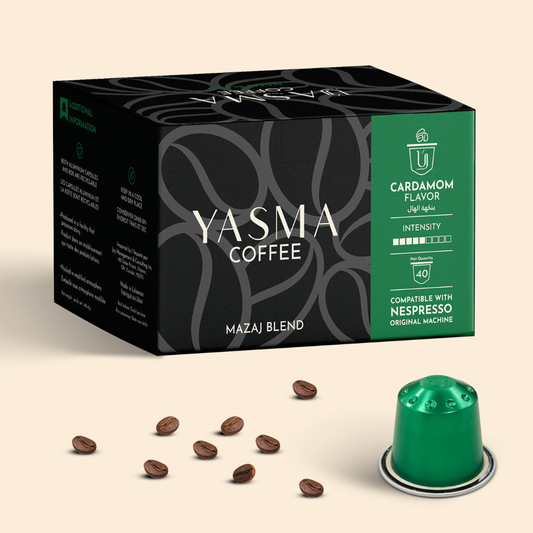
The Mazaj Blend capsule is not a simulation of Lebanese coffee. It is Lebanese coffee, in a format that works on a Tuesday morning in Ottawa or Toronto or Vancouver.
Why This Tradition Matters Today
There's a reason cardamom coffee is growing in popularity outside the Arab world. It's not just a trend. It's a response to something that a lot of coffee drinkers have been quietly noticing: that most of what's available in the mainstream market is technically proficient but experientially flat. Good extraction, consistent temperature, reliable caffeine — but nothing that makes you feel like the cup came from somewhere.
Cardamom coffee comes from somewhere. It comes from a tradition of hospitality that decided centuries ago that the way you serve someone a drink says something about how you regard them. It comes from a spice trade that connected continents. It comes from families in Beirut and Amman and Jerusalem who have been starting their mornings with this particular smell and this particular taste for generations.
When you drink Yasma Mazaj Blend — whether it's a capsule, a cold brew pod, or ground coffee steeped overnight — you are drinking something that carries that history. Not as a marketing claim. As an actual fact about what is in the cup and where it came from.
That's rare. And in a market full of coffee brands competing on price and convenience, it's the thing that matters most.
Bringing Ahweh Into Your Morning
You don't need a dallah. You don't need a long-spouted brass pot or a special cup from a Beirut market. You need good Lebanese Arabica, real green cardamom, and two minutes.
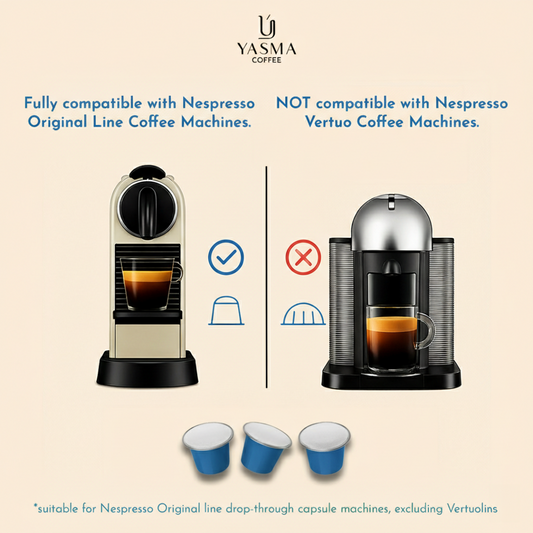
With a Nespresso machine: Pull a Mazaj Blend capsule into a small espresso cup. The cardamom is already there. Drink it slowly. That's Ahweh in its most modern form — authentic in every way that matters, convenient in every way that the morning requires.
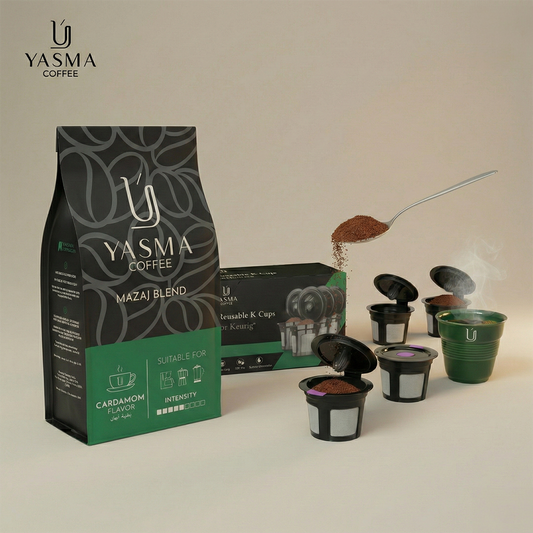
With ground coffee: Steep Yasma Mazaj Ground Coffee with a few crushed cardamom pods overnight in cold water for cold brew, or brew it hot through a French press or pour-over. The result is closer to the traditional dallah method than any capsule — slow, aromatic, made with your hands.
With Cold Brew pods: Drop a Cardamom Infused Cold Brew pod into a litre of cold water before bed. Wake up to a full litre of Lebanese cardamom cold brew in your fridge. It's not how they did it in the 14th century, but the cardamom is real and the Arabica is Lebanese. The tradition is intact.
The ritual matters more than the equipment. Take a moment. Smell the cup before you drink it. Notice the cardamom. Think about what it means that this spice has been in this coffee for hundreds of years, and that it found its way to your kitchen in Canada.
That's the point of Ahweh. It has always been about more than the coffee.

Frequently Asked Questions
What is the difference between Lebanese coffee and Turkish coffee?
Lebanese coffee (Ahweh) and Turkish coffee are related but distinct. Both use finely ground Arabic Arabica beans and are brewed without a filter. The main differences are in the spice and the roast. Lebanese coffee almost always includes green cardamom and uses a lighter or medium roast. Turkish coffee is typically darker, brewed without spice, and has a stronger, more bitter profile. The brewing vessel also differs — Lebanese coffee uses a dallah (long-spouted pot) while Turkish coffee uses a cezve (small, handled copper pot). Culturally, they carry different traditions of hospitality and etiquette.
What does cardamom add to coffee, exactly?
Green cardamom adds a floral, slightly citrusy, warmly spiced aroma and flavour to coffee. It naturally reduces perceived bitterness, supports digestion, and freshens the breath after drinking. In Lebanese tradition, it is not considered optional — it is what makes coffee Lebanese rather than simply coffee.
Is Lebanese coffee the same as Arabic coffee?
Lebanese coffee is a variety of what is broadly called Arabic coffee (Qahwa Arabiya). Arabic coffee is the umbrella term for the cardamom-spiced coffee tradition across the Arab world, with regional variations in roast level, additional spices, and serving customs. Lebanese Ahweh sits within that tradition but has its own distinct character — typically medium roast, cardamom-forward, served in small cups without the elaborate etiquette of the Gulf-style Qahwa.
Does Yasma use real cardamom or cardamom flavouring?
Yasma uses real green cardamom in all products where cardamom is listed as an ingredient — including Mazaj Blend capsules, Mazaj Decaf capsules, and the Cardamom Infused Cold Brew pods. The ingredient list on every box reads: Premium roasted ground coffee, Cardamom. No flavouring, no extract, no approximation.
Can I make traditional Ahweh with Yasma products?
Yes. The closest result to traditional Ahweh using Yasma products is the Mazaj Ground Coffee brewed hot in a small pot with additional crushed cardamom pods if you want a stronger spice presence. For a modern but authentic version, the Mazaj Blend capsule in a Nespresso machine gives you Lebanese Arabica and real cardamom in under a minute. The flavour tradition is intact either way.
A Cup With a History
Every morning that starts with cardamom coffee is a morning that connects to something larger than the routine. A tradition that crossed continents through spice trade routes. A ritual of hospitality that decided centuries ago that the way you serve someone a drink is a form of care. A family in Lebanon who named a coffee company after a daughter, because that's the kind of love that belongs in what you make.
The cup is small. The history behind it is not.