Long before "functional coffee" became a marketing category, families across Lebanon and the broader Middle East were already doing something quietly functional every single day: dropping a few pods of cardamom into the coffee pot. Not as a trend, not as a wellness hack, but simply as how coffee was made, a habit passed down through generations, embedded so deeply in daily life that nobody thought to call it anything special. It just was coffee.
It's only in recent decades, as cardamom has drawn more attention from nutrition researchers, that the "why" behind the tradition has started to come into clearer focus. It turns out the instinct our grandparents had, that cardamom belonged in the coffee pot, lines up surprisingly well with what modern science is finding about the spice itself.
This is a look at what tradition has always claimed about cardamom coffee, and where current research actually backs that up.
A Ritual Older Than the Question "Is This Good For You?"
In Lebanese households, coffee brewed with cardamom (often called ahweh or gahwa, depending on the region and preparation) has never really needed a health justification. It was simply hospitality, the drink offered to a guest the moment they sat down, brewed in a rakwa over a low flame, poured into small cups, and shared as the anchor of a conversation that might last hours.
But ask anyone who grew up drinking it why cardamom belonged there, and you'll usually hear some version of the same answer: it settles the stomach, it feels warming, it makes coffee easier to drink without feeling jittery or acidic afterward. These are the kinds of observations that get passed down through lived experience across enough generations that they start to look less like folklore and more like accumulated, informal data. And in cardamom's case, a fair amount of that informal data holds up.
Digestion: The Claim Tradition Makes Most Often
Ask about cardamom's role in coffee and digestive comfort is almost always the first thing mentioned. This is also the area with the most established research behind it. Cardamom has long been used in traditional medicine systems, including Ayurveda and traditional Middle Eastern practices, as a digestive aid, something taken after a heavy meal or alongside foods and drinks known to cause stomach discomfort.
Modern research on cardamom's compounds, including cineole and other essential oils concentrated in the seeds, has pointed to genuine carminative properties, meaning cardamom may help reduce bloating and gas, and support smoother digestive function generally. This lines up closely with a common modern complaint about regular black coffee: that it can be hard on the stomach, especially on an empty one. Pairing coffee with cardamom appears to genuinely offset some of that discomfort, rather than simply masking it with flavor, which likely explains why the pairing became so deeply rooted in the first place.
Heart Health: An Emerging but Promising Area of Research
Cardamom has also drawn interest for its potential cardiovascular benefits, an area where research is younger but increasingly encouraging. Some studies have examined cardamom's antioxidant content and its potential role in supporting healthy blood pressure levels, largely attributed to compounds that may help relax blood vessels and reduce oxidative stress in the body.
This is a case where tradition and science are pointing in a similar direction without either side having fully "caught up" to the other. Cardamom has long been associated with general wellness in Middle Eastern and South Asian traditional practices, heart health included, and while the research base is still developing compared to more heavily studied spices, the early findings are consistent enough to take seriously, particularly for anyone already looking at their coffee habit as one small, daily choice among many that add up over time.
Anti-Inflammatory and Antioxidant Properties
Cardamom is rich in antioxidant compounds, which help the body manage oxidative stress, the kind of cellular wear and tear linked to aging and a wide range of chronic health conditions. Several studies on cardamom extract have found measurable anti-inflammatory activity, adding a research-backed layer to what traditional medicine has claimed for a very long time: that cardamom isn't just a flavor spice, but one with genuine functional properties.
Coffee itself is also a notable source of antioxidants on its own, thanks to compounds like chlorogenic acid. Brewing it with cardamom effectively stacks two antioxidant-rich ingredients into a single daily cup, rather than diluting one with the other.
Immunity and Everyday Wellness
Cardamom has a long history of use in traditional remedies aimed at supporting the immune system, often as part of warming spice blends used during colder months or times of seasonal illness. While immunity is a notoriously difficult thing to measure precisely in nutrition research, cardamom's broader profile, antioxidant-rich, anti-inflammatory, historically used to support respiratory and digestive wellness, fits within a pattern researchers associate with general immune support, even where cardamom-specific clinical trials are still limited.
This is a good moment for an honest caveat: no coffee, cardamom-infused or otherwise, should be treated as a substitute for medical care, a balanced diet, or professional health advice. What cardamom coffee offers is a genuinely wholesome daily ritual with real, research-supported properties, not a cure or a medical intervention.
Fresher Breath: The Detail Tradition Never Forgot
Long before "cardamom" started showing up as an ingredient in gum and mints, it was already known across the Middle East and South Asia as a natural breath freshener, chewed on its own after meals in many households, coffee shops, and, notably, alongside coffee itself, which has a well-known reputation for leaving less-than-fresh breath behind.
This one is less about deep physiological research and more about a straightforward, observable effect: cardamom's aromatic oils genuinely do combat the compounds responsible for coffee breath, offering a natural, built-in freshening effect that black coffee alone simply doesn't provide. It's a small detail, but it's one more example of how deliberately cardamom was chosen as coffee's companion, not randomly, but because it solved a real, everyday problem.
Balanced Energy, Without the Edge
One of the most common things people notice when they switch from regular black coffee to a cardamom-infused blend is a difference in how the caffeine actually feels, less of a sharp spike followed by a crash, and more of a steady, even lift. This isn't purely anecdotal; cardamom's calming, slightly warming aromatic profile has traditionally been associated with a smoothing effect on how stimulants are experienced, even if the caffeine content itself hasn't changed.
For anyone who loves coffee but has grown wary of the jittery, acidic edge that can come with drinking it, particularly on an empty stomach or later in the day, this is often the most immediately noticeable benefit of switching to a cardamom blend. It's coffee that still wakes you up, just without feeling like it's fighting you on the way there.
Why This Tradition Deserves More Credit
What makes cardamom coffee interesting isn't that science has "discovered" something new. It's that a practice developed generations ago, purely through lived experience and passed-down habit, is holding up remarkably well against modern research. Digestive comfort, antioxidant and anti-inflammatory properties, potential cardiovascular support, fresher breath, and a steadier energy curve, these aren't marketing claims invented to sell a product. They're observations that Middle Eastern households arrived at long before anyone ran a clinical study, and that current research is now, gradually, catching up to explain.
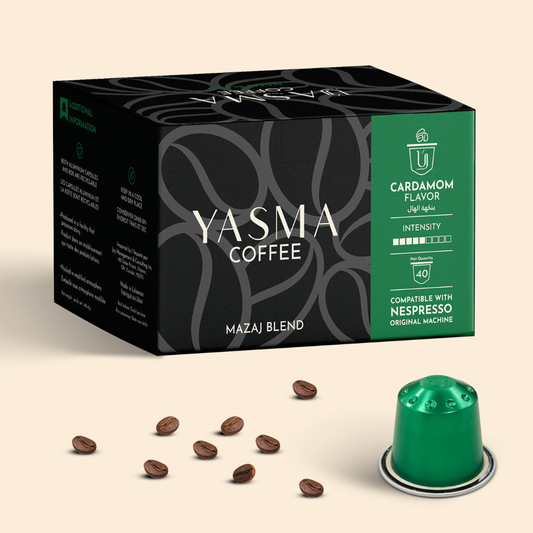
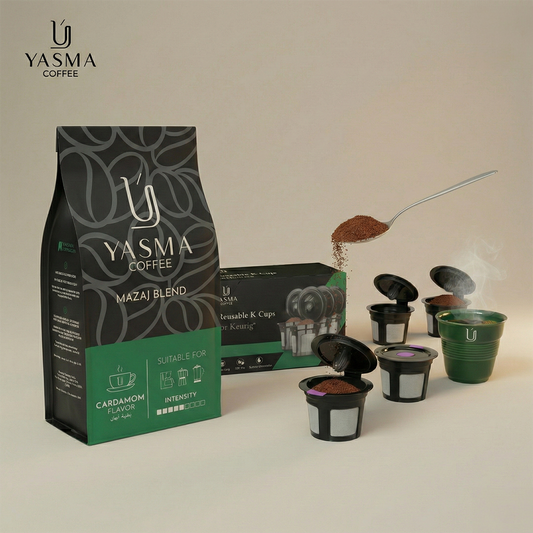
That's the foundation Yasma Coffee is built on: real green cardamom, infused into real Lebanese Arabica, brewed the way this pairing has always been meant to be brewed, not as a wellness gimmick, but as a genuinely better way to drink coffee every single day.
Explore the full Yasma Coffee capsule collection or cardamom-infused ground coffee to bring this tradition into your own daily ritual.
This article is for general informational purposes and does not constitute medical advice. Speak with a healthcare provider about any specific health concerns or before making changes to your diet.