Walk into a café in Canada and ask for "Turkish coffee," and you might be served something that a Lebanese grandmother would call ahweh, a Turkish host would call Türk kahvesi, and a family in the Gulf would not recognize as their gahwa at all.
These three coffee traditions are often treated as one. They are related, they share a long history, and they all come from cultures where offering coffee means offering welcome. But they are not the same drink. Each has its own roast, its own spice, its own pot and its own way of being served.
Here is how to tell them apart.
Why they get mixed up
Coffee travelled from Yemen across the Arabian Peninsula and into the Ottoman Empire in the 1500s. Coffeehouses spread from Istanbul to Cairo, Damascus and Beirut, and with them came a shared way of brewing: finely ground coffee simmered in a small pot and poured, unfiltered, into small cups.
Over the centuries, each region shaped that method in its own direction. The Gulf held onto a lighter, heavily spiced style with deep Bedouin roots. Turkey refined a very fine grind and a thick foam. Lebanon developed a darker, more robust cup, very often scented with cardamom.
So when people call all of them "Turkish coffee," they are pointing at a real family resemblance. They are just missing the differences that matter most to the people who drink them every day.
Turkish coffee
Turkish coffee is defined by its grind. The beans are milled into a powder almost as fine as flour, finer than almost any other brewing method uses.
How it is made: cold water, coffee and sugar (if any) go into a small long-handled pot called a cezve. The pot is heated slowly until a thick foam rises to the top. The coffee is poured, grounds and all, into small cups, and the grounds settle to the bottom as it rests.
Spice: traditionally, Turkish coffee is brewed without spice. Some people add cardamom, but it is not the standard.
Sweetness: sugar is decided before brewing, not after. A Turkish host will usually ask whether you take it plain (sade), medium (orta) or sweet (şekerli).
Serving: it is typically served with a glass of water and often a piece of Turkish delight. In 2013, UNESCO recognized Turkish coffee culture and tradition as part of the world's intangible cultural heritage.
Gulf Arabic coffee (gahwa)
Gulf Arabic coffee, often called gahwa or qahwa, may surprise people who expect "Arabic coffee" to be dark and intense.
Roast: the beans are lightly roasted, giving the coffee a golden color and a delicate, almost tea-like body.
Spice: cardamom is central and generous. Many families also add saffron, cloves or rosewater, depending on the region and the occasion.
How it is served: gahwa is poured from a dallah, the elegant long-spouted pot that has become a symbol of Gulf hospitality. It is served in small handleless cups called finjan, filled only a little at a time and refilled until the guest gently shakes the cup to signal they are done.
Sweetness: gahwa is usually unsweetened. The sweetness comes from the dates served alongside it.
Arabic coffee as a symbol of generosity was added to UNESCO's intangible heritage list in 2015, nominated by the UAE, Saudi Arabia, Oman and Qatar.
Lebanese coffee (ahweh)
Lebanese coffee, called ahweh in the Lebanese dialect, sits between the other two in method, but has a character all its own.
Roast: Lebanese coffee uses a darker roast than Gulf gahwa, which gives it more body, more depth and a bolder finish.
Grind: the coffee is finely ground, though usually not quite as powdery as Turkish coffee.
Spice: many Lebanese families grind green cardamom, known as hal, together with the beans. Others drink their ahweh plain. Both are considered authentic, and every household has its preference.
How it is made: ahweh is brewed in a raqwa, a small pot with a long handle. The coffee is brought up to a gentle foam, taken off the heat, and brought up again before pouring. Sugar is added in the pot, and hosts often ask whether you want it plain (sada), medium (wasat) or sweet.
Serving: it is poured into small cups and offered at nearly every visit, celebration and gathering, and also at moments of condolence. As we wrote in The Lebanese Coffee Ritual, the cup is almost secondary. What matters is the welcome.
Lebanese vs Turkish vs Arabic coffee at a glance
| Turkish coffee | Gulf Arabic coffee (gahwa) | Lebanese coffee (ahweh) | |
|---|---|---|---|
| Roast | Medium to dark | Light, golden | Dark |
| Grind | Powder-fine | Coarser, boiled then strained | Fine |
| Spice | Usually none | Generous cardamom, often saffron or cloves | Cardamom very common, plain also traditional |
| Brewing pot | Cezve | Brewed in a pot, served from a dallah | Raqwa |
| Sweetness | Chosen before brewing | Usually unsweetened, served with dates | Chosen before brewing |
| Serving style | Small cup, foam on top, glass of water | Small handleless cups, refilled often | Small cups, offered at every visit |
So what is "Arabic coffee," exactly?
"Arabic coffee" is used in two ways, which adds to the confusion.
In the narrow sense, it means Gulf gahwa, the light, spiced coffee poured from a dallah. In the broad sense, it describes the many coffee traditions across the Arab world, Lebanese ahweh included. If someone asks about the different types of Arabic coffee, the honest answer is that there are as many as there are regions, and each family will tell you theirs is the right one.
One more source of mix-ups: Arabica is not a style of coffee at all. It is the coffee plant species, Coffea arabica, grown all over the world. Arabic coffee is a way of preparing coffee. Arabica describes the beans. A Lebanese ahweh can be made with Arabica beans, and Yasma's coffee is.
Where Yasma Coffee fits
Yasma Coffee is Lebanese coffee. Not Turkish, not Gulf, but rooted in the ahweh of Lebanese homes, brought into formats that fit a modern Canadian kitchen.
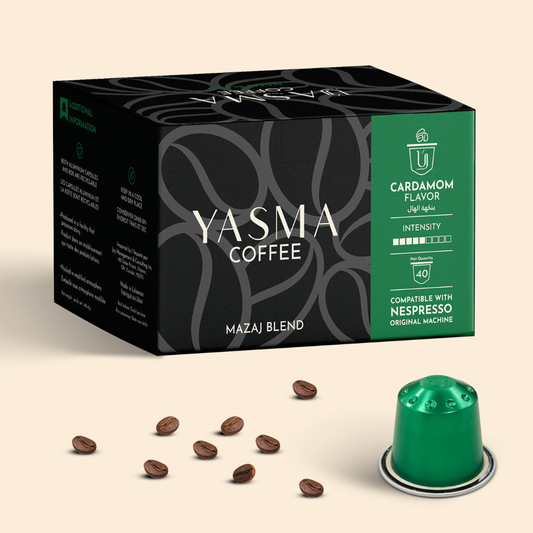
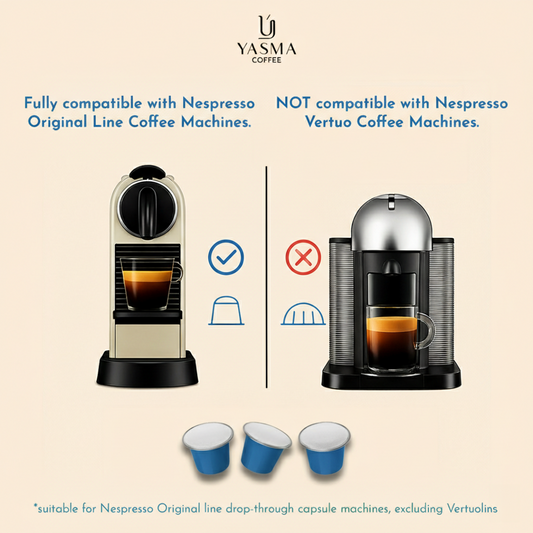
- Mazaj Blend carries the cardamom side of the Lebanese tradition: Lebanese Arabica with real green cardamom, in capsules compatible with Nespresso Original machines.
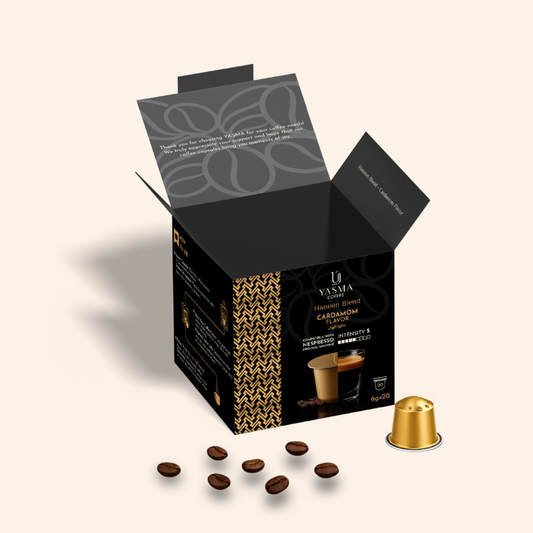
- Haneen Blend is for those who take their ahweh plain. It is pure Lebanese Arabica, bold at an intensity of 8 out of 10, with nothing added. You can read more in Bold, Pure, No Spice: Inside Yasma's Haneen Blend.
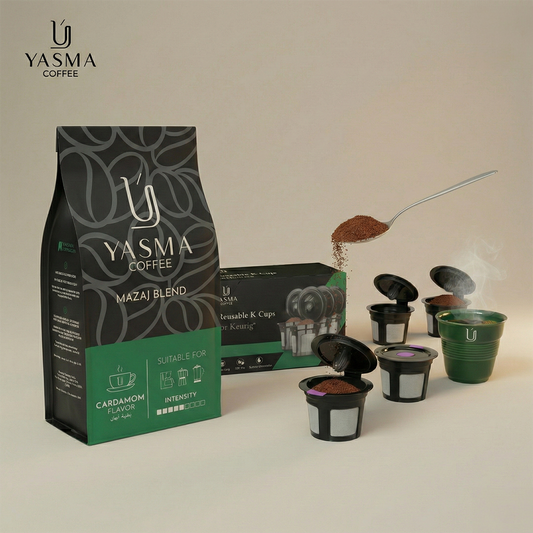
- Mazaj Ground Coffee brings Lebanese Arabica and green cardamom to the French press, moka pot, pour over and drip machine.
A capsule is not a raqwa, and we would never claim it is. What we carry forward is the flavor, the origin and the spirit of the tradition, so that the coffee in your cup on a busy Tuesday still tastes like it came from somewhere.
Frequently asked questions
Is Lebanese coffee the same as Turkish coffee? No. They share a similar brewing method, but Lebanese coffee usually uses a darker roast, is very often brewed with cardamom, and carries its own customs of hospitality.
What is the difference between Arabic and Turkish coffee? Gulf Arabic coffee is lightly roasted, heavily spiced and usually unsweetened. Turkish coffee is powder-fine, usually unspiced, and served with a thick foam and the grounds left in the cup.
Does Turkish coffee have cardamom? Traditionally, no. Some people add it, but plain is the standard.
Is Arabic coffee strong? Gulf gahwa is lightly roasted, so it tastes gentler than most people expect. Lebanese ahweh is darker and bolder.
Can I make Lebanese coffee in a Nespresso machine? Not in the traditional way, since ahweh is brewed in a raqwa. But Mazaj Blend capsules give you the flavor of Lebanese Arabica with real green cardamom in under a minute.
One family, many cups
Lebanese, Turkish and Gulf Arabic coffee grew from the same roots and kept the same heart: coffee as a way of saying welcome. Knowing the differences is a way of respecting each of them.
Explore the Yasma Coffee capsule collection and bring the Lebanese side of that story home.